
Hot Oven Safety: Essential Tips to Prevent Baking Burns and Keep Your Hands Safe
Burns in the kitchen happen more often than most home bakers realize. A quick reach into a hot oven or a misplaced pan can lead to painful baking burns before you even notice. This post breaks down the everyday mistakes that cause these accidents and shares practical home baking tips to keep your hands safe. Read on to learn simple baking precautions and hot oven safety habits that protect you while you create your favorite treats. For more tips, visit this link.

Order the Ove Glove today and get FREE shipping!
Common Causes of Baking Burns
Let’s identify the usual culprits behind those unexpected burns that catch you off guard.
Reaching Into a Hot Oven
This common mistake happens when you rush. You open the oven door, eager to check on your baking, and reach inside without thinking. The heat can be deceiving. You feel the intense warmth on your skin before you have time to react. Always ensure you’ve got the right protection on your hands before reaching in. An ove glove can be your best ally. It provides the necessary barrier, saving your skin from the harsh heat. For more detailed precautions, consult these cooking safety tips.
Mismanaging Hot Pans and Sheets
Handling hot pans is another scenario where burns occur frequently. You might think you have a good grip, but it only takes a slight slip up to end up with a burn. Always use oven gloves designed for high temperatures to get a firm and safe grip. Make it a habit to check and double-check your hold before moving hot items. This simple step can prevent a lot of pain.
Overlooking Protective Gear
Skipping protective gear is a shortcut that can lead to injury. You might feel confident in your skills or think you’re just making a quick move. But in the kitchen, quick decisions can lead to lasting regret. Protective gear like oven gloves and sleeves aren’t just for beginners. They’re essential tools for everyone, helping to ensure your baking endeavors remain pain-free. Learn more about preventing burns from kitchen hazards.
Essential Preventative Measures
Understanding the causes of burns is just the beginning. Now, let’s explore ways to protect yourself.
Using Oven Gloves Effectively
Oven gloves are your first line of defense against burns. But it’s not just about wearing them. It’s about using them correctly. Choose gloves that can withstand high temperatures. Test them periodically to ensure they haven’t worn out. When you’re ready to handle hot items, make sure your gloves are dry. Wet gloves can conduct heat quickly, leading to burns despite your precautions.
Implementing Safe Baking Practices
Safe baking practices aren’t just about the gloves. It’s about the entire process. Always position yourself properly when checking the oven. Stand to the side, not directly in front, to avoid the gush of hot air. Use timers not just for baking, but to remind you of when to check your food. This keeps you aware and reduces the chances of accidents.
Organizing the Baking Space
A cluttered kitchen is a dangerous kitchen. Organize your space so that you’re not reaching over hot surfaces unnecessarily. Keep utensils within easy reach and clear away any potential obstacles. A well-organized kitchen not only makes baking more enjoyable but also significantly safer. For further insights on kitchen organization, visit this helpful guide.
Tips for Enhanced Kitchen Safety
Safety in the kitchen is about awareness and habits. Let’s delve deeper into maintaining a secure environment.
Maintaining Focus and Awareness
Staying focused while baking is crucial. It’s easy to get distracted, but that’s when accidents happen. Treat baking like a job: give it your full attention. Keep distractions like phones or tablets away while handling hot items. If you find your mind wandering, take a moment to pause and refocus.
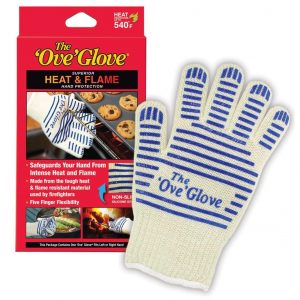
Protect your hands while cooking with the Ove Glove
Setting a Safe Baking Routine
Establishing a routine can help reinforce good habits. Before you start, run through a checklist: are your gloves ready? Is the space clear and organized? By making this a habit, you reduce the risk of missing key safety steps. Consistent routines lead to safer baking experiences.
Educating Family Members
You’re not baking in isolation. Family members can impact your kitchen safety. Educate them about the importance of maintaining a safe environment. Encourage them to communicate when they’re in the kitchen with you. This way, everyone knows what to expect, reducing the risk of accidents.
Recognizing Home Baking Hazards
Identifying hazards is key to preventing them. Let’s look at common risks in your kitchen.
Identifying Risky Baking Habits
Everyone has habits that might seem harmless but can be risky. For instance, you might be used to reaching across the stove. Or leaving oven doors open while you check something. Take a moment to analyze your habits. Recognize which ones could lead to accidents and work on changing them.
Understanding Oven and Tool Dangers
Your oven and tools can be more hazardous than they appear. Ovens can have hot spots, and tools can become unstable over time. Always keep your tools in good condition. Regularly inspect them for wear and tear. Understanding these potential dangers helps you stay one step ahead.
Addressing Kitchen Distractions
Distractions are a major cause of kitchen accidents. Identify what typically distracts you. Is it the TV, kids, or maybe even the radio? Once you understand the source, find ways to minimize its impact while you bake. A distraction-free environment is a safer one.
Creating a Safe Baking Environment
Now that you’re aware of the hazards, create a space that supports safe baking.
Investing in Quality Safety Gear
High-quality gear is an investment in safety. Choose oven gloves that offer robust protection. Look for tools that are durable and designed for safety. Quality gear may cost more upfront but can save you from costly accidents down the line.
Adjusting Kitchen Layout for Safety
The layout of your kitchen can influence safety. Ensure there’s enough space around your oven and baking areas. This makes it easier to maneuver, reducing the risk of bumping into hot surfaces. A well-thought-out layout supports smoother, safer baking.
Incorporating Safety into Baking Routine
Finally, integrate safety into every aspect of your routine. From preparation to clean-up, keep safety at the forefront. This mindset shift not only protects you but also allows you to enjoy baking more. The confidence of knowing you’re safe enhances the overall experience.


All major credit cards accepted
Free Shipping – Order – Track Order – Contact Us
How to Prevent Burns When Taking Food Out of the Oven
How to Prevent Burns When Taking Food Out of the Oven Burns in the kitchen happen more often than you think, especially when handling hot dishes straight from the oven. If you’ve ever flinched from a sudden steam burst or struggled with slippery mitts, you’re not alone. This post shares [...]
Can Oven Mitts Get Wet? Why Moisture Makes Heat Protection Worse
Can Oven Mitts Get Wet? Why Moisture Makes Heat Protection Worse Using wet oven mitts is more dangerous than most people realize. Moisture can sneak into the fabric and cut down its heat protection, putting your hands at risk. If you care about kitchen safety, understanding the moisture impact on [...]
Best Oven Gloves for Air Fryers
Best Oven Gloves for Air Fryers Handling hot air fryer baskets without the right gloves can turn meal prep into a risky task. Many oven gloves fall short when it comes to heat resistance, grip, or flexibility, making it harder to cook safely and comfortably. This guide highlights the best [...]
Best Oven Mitts for People With Small Hands and Large Hands
Best Oven Mitts for People With Small Hands and Large Hands Most oven mitts come in one size fits all, but that often means they fit no one well. If you have small hands, bulky mitts can feel clumsy and unsafe. Large hands? You might struggle to get a proper [...]
Are Oven Mitts or Gloves Better for Grip?
Are Oven Mitts or Gloves Better for Grip? Grabbing hot cookware without a solid grip can turn your kitchen into a danger zone. Oven mitts and gloves both promise protection, but which one really holds tight when it matters most? Let’s break down how texture, flexibility, and coverage affect oven [...]
Oven Mitt vs Oven Glove: What’s the Difference?
Oven Mitt vs Oven Glove: What's the Difference? Most home cooks treat oven mitts and oven gloves like the same thing. The truth is, each offers different levels of heat resistance, coverage, and control. Knowing these differences can keep you safer and more comfortable in the kitchen. Let’s break down [...]


